
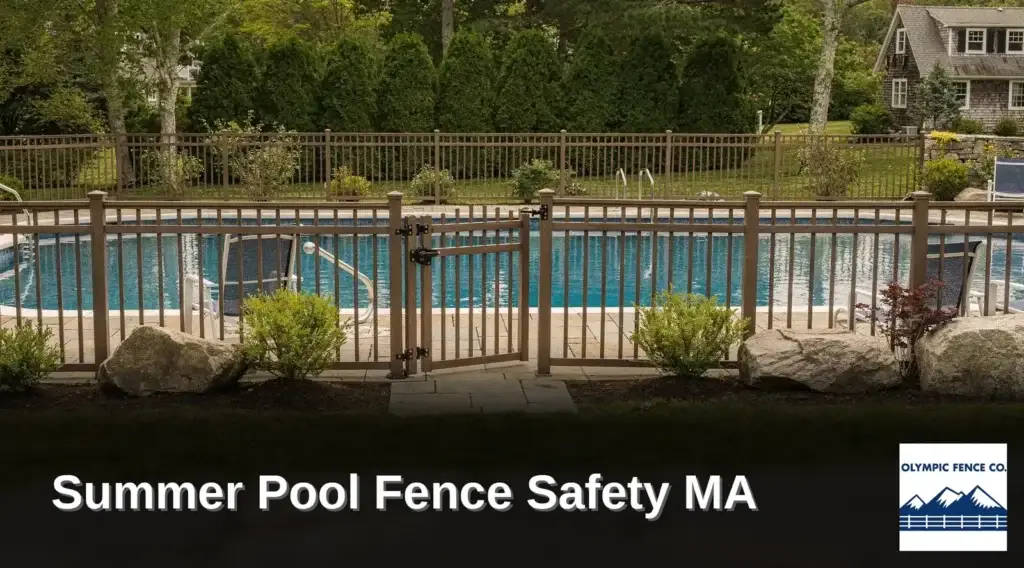
Summer Backyard Privacy & Pool Security: Key Fencing Upgrades for Massachusetts Homeowners
By Olympic Fence Co Editorial Team · Updated 2026-08-06
Massachusetts pool fence code mandates a 48-inch minimum barrier height for pools over 24 inches deep, self-closing/self-latching gates, and no gaps exceeding 4 inches. Olympic Fence Co, serving Massachusetts since 1985 with over 40 years of experience, installs code-compliant pool fencing alongside privacy fence upgrades for full backyard safety and style.
Massachusetts pool fence safety code requires barriers that separate swimming pools from surrounding yards, reducing accidental drowning risk for children and pets statewide. Olympic Fence Co, serving Massachusetts homeowners since 1985, installs code-compliant cedar, vinyl, and ornamental aluminum pool fencing alongside backyard privacy upgrades, backed by a lifetime workmanship warranty exceeding competitors’ standard 2-3 year coverage.
Massachusetts Pool Safety and Privacy Fencing Standards
Massachusetts pool fence code establishes clear safety rules that every pool owner must follow for legal compliance.
Pool fences require meeting safety regulations while providing aesthetic appeal and peace of mind for homeowners.
Olympic Fence Co brings over 40 years of experience installing code-compliant residential fencing solutions since 1985.
Proper pool fencing installation protects families, ensures regulatory compliance, and enhances backyard privacy simultaneously.
Massachusetts pool fence code establishes clear safety rules that every pool owner must follow for legal compliance.
Pool fences require meeting safety regulations while providing aesthetic appeal and peace of mind for homeowners.
Olympic Fence Co brings over 40 years of experience installing code-compliant residential fencing solutions since 1985.
Proper pool fencing installation protects families, ensures regulatory compliance, and enhances backyard privacy simultaneously.
What Does Massachusetts Pool Fence Code Require?
Massachusetts pool fence code sets specific height, gap, and barrier rules for every residential pool. Compliance falls under the Massachusetts State Building Code, known as 780 CMR, which incorporates provisions from IRC Appendix G, a national standard for residential pool safety. Homeowners who ignore these standards risk fines, insurance complications, and — far more critically — preventable drowning incidents.
State law does not stop at the building code. Summer pool fence safety MA rules also draw from 105 CMR 435.00 and Massachusetts General Law Chapter 140, Section 206, both of which mandate a compliant safety barrier around every residential pool. Together, these statutes form a layered legal framework that pool owners across the state must follow before opening for the season.
The core requirements include the following:
Any pool deeper than 24 inches, including inflatable and above-ground models, needs a protective barrier at least 48 inches high.
Barrier openings cannot exceed dimensions that would allow a small child to pass through.
Gates and access points must meet self-closing and self-latching standards outlined under 780 CMR.
Any pool deeper than 24 inches, including inflatable and above-ground models, needs a protective barrier at least 48 inches high.
Barrier openings cannot exceed dimensions that would allow a small child to pass through.
Gates and access points must meet self-closing and self-latching standards outlined under 780 CMR.
Why does barrier height matter so much?
A 48-inch minimum is not an arbitrary figure. Data from the CDC shows that fencing surrounding a pool reduces drowning risk by 83 percent compared to unfenced pools. That single statistic explains why Massachusetts regulators treat barrier height as a non-negotiable safety threshold rather than a suggestion.
Do above-ground pools need the same barrier?
Yes. Depth, not pool type, triggers the requirement. Any above-ground or inflatable pool exceeding 24 inches in depth must have a compliant barrier installed before it holds water for the season, regardless of how temporary the setup appears.
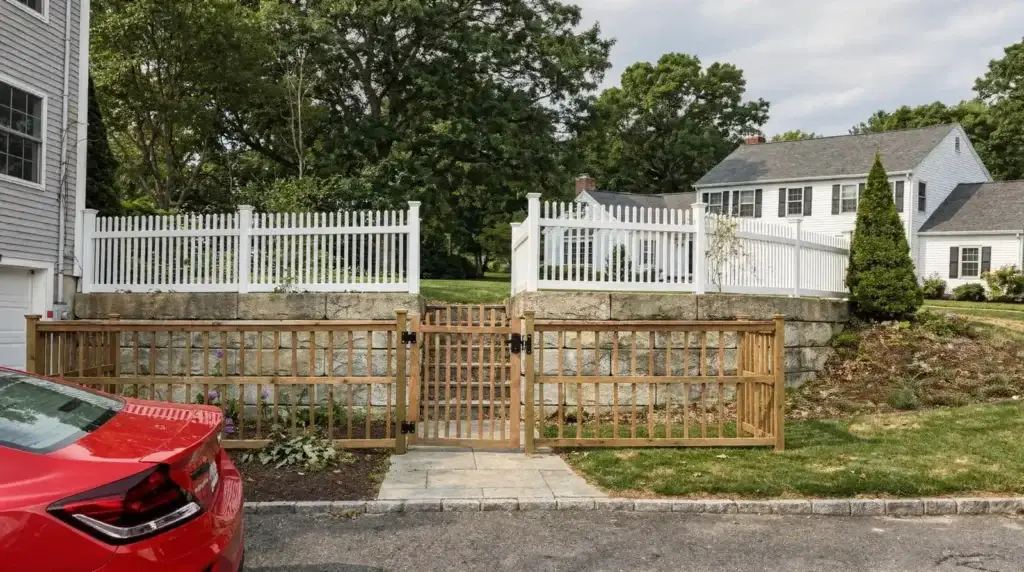
How Do You Bring A Pool Fence Up To Code?
Massachusetts homeowners bring a pool fence up to code by correcting four measurable trouble spots: opening size, gate hardware, ground clearance, and overall coverage. Skipping any one of these creates a legal liability and a genuine drowning risk for young children and pets. Compliance is not optional guesswork; state guidelines spell out exact measurements. Below is the sequence pool owners should follow to verify and fix a barrier before summer swim season begins.
Measure every fence opening. No gap in the barrier may exceed 4 inches, since a sphere that size must never fit through any picket spacing, lattice pattern, or ornamental design.
Inspect the gate hardware. Gates must self-close and self-latch automatically, swing outward away from the pool area, and hold a latch mounted at least 54 inches above the ground.
Check ground clearance. Slide a measuring tape under the fence line; the gap between the bottom rail and the ground cannot exceed 2 inches anywhere along the perimeter.
Confirm the pool qualifies. The requirement covers any pool 24 inches deep or greater, including inflatable and above-ground models set up seasonally in a backyard.
Measure every fence opening. No gap in the barrier may exceed 4 inches, since a sphere that size must never fit through any picket spacing, lattice pattern, or ornamental design.
Inspect the gate hardware. Gates must self-close and self-latch automatically, swing outward away from the pool area, and hold a latch mounted at least 54 inches above the ground.
Check ground clearance. Slide a measuring tape under the fence line; the gap between the bottom rail and the ground cannot exceed 2 inches anywhere along the perimeter.
Confirm the pool qualifies. The requirement covers any pool 24 inches deep or greater, including inflatable and above-ground models set up seasonally in a backyard.
Does an above-ground or inflatable pool need a fence too?
Yes. Depth, not pool type, triggers the requirement. An inflatable pool holding water at 24 inches or deeper needs the same barrier standards as a permanent in-ground installation, a detail many families overlook during summer pool fence safety MA planning.
What happens if a fence fails inspection?
A noncompliant barrier typically means reworking gate hardware, closing opening gaps, or extending panels to the ground. Olympic Fence Co, licensed and insured for pool fence work throughout Massachusetts, corrects these deficiencies and rebuilds barriers to meet current code before pool season opens.
How Much Does A Privacy Fence Upgrade Cost?
Material choice drives the price gap for most homeowners weighing a backyard privacy fence cost Massachusetts upgrade. Vinyl and wood sit at the center of that decision, and the two materials diverge sharply once long-term expenses enter the picture.
Upfront pricing tells only part of the story. Wood fences typically cost less to install initially. They require routine staining or sealing every two to three years to prevent decay and insect damage. That recurring maintenance adds labor and material costs that vinyl owners simply don’t face.
Factor | Wood | Vinyl |
|---|---|---|
Initial installation cost | Lower | Higher |
Maintenance frequency | Every 2-3 years | Minimal |
Long-term cost trajectory | Rises over time | Stays apartment |
Factor
Wood
Vinyl
Initial installation cost
Lower
Higher
Maintenance frequency
Every 2-3 years
Minimal
Long-term cost trajectory
Rises over time
Stays apartment
Is Vinyl Worth The Higher Upfront Cost?
For many pool owners, yes. A properly executed vinyl privacy fence installation Essex County project eliminates the staining and sealing cycle wood demands, which offsets the higher initial price within several maintenance cycles. Homeowners planning to keep a property long-term often find vinyl the more economical choice overall.
Olympic Fence Co. offers residential, commercial, and municipal fencing solutions, giving pool owners a single source for both vinyl and wood privacy options. That range matters when comparing materials side by side rather than relying on estimates from separate contractors.
How Fast Can Homeowners Get A Quote?
Speed matters when a pool season approaches. Olympic Fence Co. responds to new inquiries in under five minutes, allowing homeowners to compare wood and vinyl pricing quickly before committing to a project.
Timing also affects cost. Scheduling summer fence installation North Shore MA projects early avoids the price pressure. Crew availability constraints that build as pool season progresses. Requesting quotes for both materials before spring gives homeowners the clearest picture of true long-term cost.
How Do You Plan Summer Fence Installation?
Planning starts with an early call, not a late one. Massachusetts pool owners who wait until June often lose their preferred installation window, since crews book solid once temperatures rise. Summer fence installation North Shore MA projects move fastest when homeowners request an estimate well before peak season arrives.
A structured approach avoids delays and code violations alike. The steps below outline how homeowners across Massachusetts typically move from initial contact to a finished barrier.
Request a free estimate as early in spring as possible, since summer schedules fill quickly.
Confirm pool depth and local permit requirements before selecting a fence style.
Choose a material — cedar, vinyl, or aluminum — that balances summer pool fence safety MA standards with the property’s appearance.
Schedule installation with a crew experienced in code-compliant pool barriers.
Review the finished fence for latch height, gate operation, and gap spacing before summer swim season begins.
Request a free estimate as early in spring as possible, since summer schedules fill quickly.
Confirm pool depth and local permit requirements before selecting a fence style.
Choose a material — cedar, vinyl, or aluminum — that balances summer pool fence safety MA standards with the property’s appearance.
Schedule installation with a crew experienced in code-compliant pool barriers.
Review the finished fence for latch height, gate operation, and gap spacing before summer swim season begins.
How much does a privacy fence cost in Massachusetts?
Backyard privacy fence cost Massachusetts figures vary by material, yard size, and terrain, so exact pricing depends on the specific project. Homeowners planning ahead of summer typically receive faster quotes and more flexible scheduling than those calling mid-season.
Who installs vinyl fencing in Essex County?
Olympic Fence Co. has provided vinyl privacy fence installation Essex County homeowners rely on since 1985, giving the company more than four decades of regional installation experience. A dedicated crew of eight employees builds code-compliant pool barriers for properties throughout Massachusetts. That combination of longevity and hands-on crew size supports consistent workmanship from the first estimate through final inspection.
What Mistakes Delay Pool Fence Compliance?
Confusion between ordinary yard fencing and pool barrier rules causes most compliance delays across Massachusetts. Pool fences carry stricter requirements than a standard backyard fence, a distinction many homeowners overlook until an inspector flags the property. Summer pool fence safety MA regulations exist specifically because standard fencing was never designed to prevent child or pet access to water.
Why do gate problems hold up pool inspections?
Gate errors rank among the most frequent violations inspectors cite. A gate that swings inward toward the pool. Fails to self-latch, does not meet code, regardless of fence height or material quality. Homeowners assume any gate satisfies the barrier requirement; inspectors disagree, and re-inspection scheduling can stretch a project by weeks.
How can homeowners avoid inspection delays?
Working with a licensed contractor familiar with pool barrier standards prevents repeat violations. Olympic Fence Co. responds to new inquiries in under five minutes, allowing homeowners to correct issues before a compliance deadline arrives rather than after a failed inspection.
Common mistakes include:
Installing a fence built for privacy rather than pool safety
Choosing gate hardware that swings the wrong direction
Skipping professional consultation before the inspection date
Installing a fence built for privacy rather than pool safety
Choosing gate hardware that swings the wrong direction
Skipping professional consultation before the inspection date
Correcting these errors early protects families and keeps summer pool season on schedule.