
Massachusetts Pool Fence Requirements: What Homeowners Need to Know Before Summer (2026 Edition)
By Olympic Fence Co Editorial Team · Updated 2026-08-06
SEO Title: Massachusetts Pool Fence Requirements: Height, Code & Permit Rules (2026) Meta Description: Massachusetts requires pool fences at least 4 feet tall with self-closing gates under 780 CMR. Learn the code, permit steps, and material options before swim season.
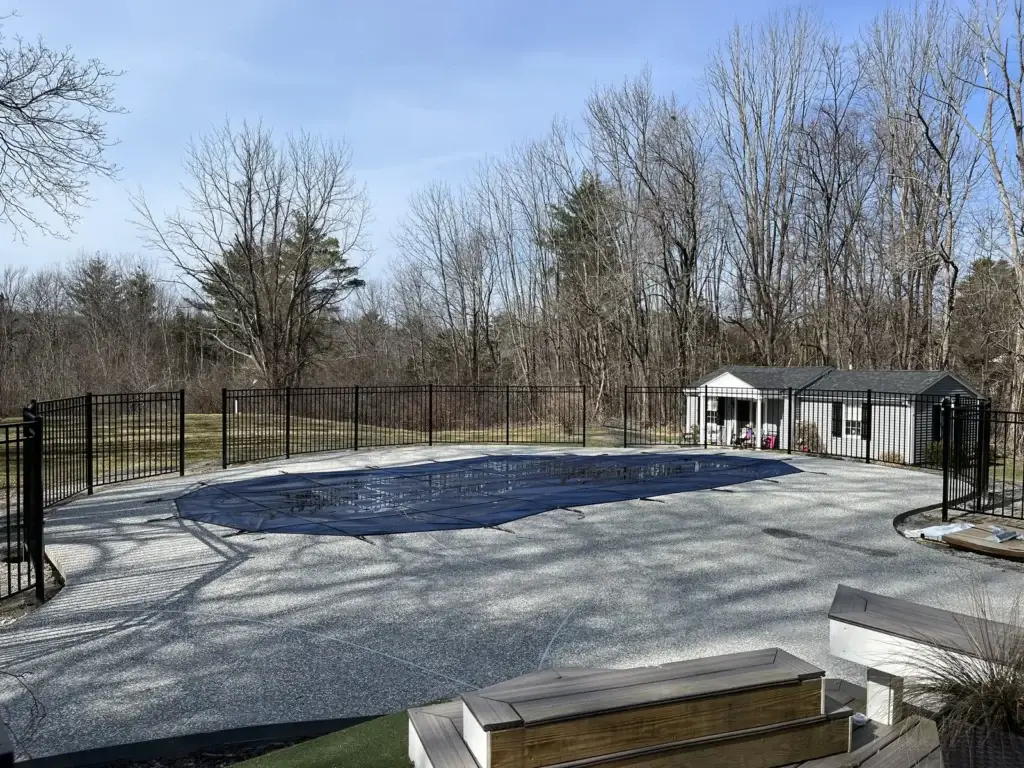
Massachusetts requires a barrier around every residential pool, whether in-ground, above-ground, or portable. The rules come from the state building code, not a separate pool law, and local towns often add their own requirements on top. Getting the fence right before the first warm weekend avoids permit delays, failed inspections, and real safety risk.
This guide covers what the code actually says, how permits work, which materials hold up best around pools, and what to look for in a contractor.
What Does Massachusetts Law Require for Pool Fencing?
Massachusetts governs pool barriers through 780 CMR, the state building code, which adopts provisions from IRC Appendix G for residential pool enclosures. There is no standalone pool fence statute. Building departments across the state apply these IRC-based rules when reviewing permits, inspecting new installations, and evaluating barriers during property sales or renovations.
Any pool that holds more than 24 inches of water triggers the barrier requirement. That includes permanent in-ground pools, above-ground pools, hot tubs, spas, and large portable or inflatable pools. The trigger is water depth, not how permanent the pool looks.
The CDC reports that a four-sided isolation fence, one that fully separates the pool from the house and yard, reduces a child’s drowning risk by 83% compared to a three-sided property-line fence (source: Thompson & Rivara, 1991, cited by CDC). That figure is why building officials treat barrier compliance as a safety matter, not paperwork.
The core requirements under 780 CMR
The state building code sets specific dimensions and hardware standards for pool enclosures:
Minimum height: 48 inches (4 feet), measured from finished ground level on the side facing away from the pool
Maximum gap at ground level: 2 inches between the bottom of the fence and the ground
Openings: No gap large enough for a 4-inch sphere to pass through
Gates: Must be self-closing and self-latching, swinging outward away from the pool
Latch placement: If the latch sits below 54 inches, it must be on the pool side, at least 3 inches below the top of the gate
Climbability: No horizontal members that create footholds if horizontal rails are spaced less than 45 inches apart
Chain-link specifics: Openings in chain-link pool fencing cannot exceed 1-3/4 inches
Some towns layer additional rules on top of the state code. Boston, for example, requires a 6-foot concealing fence when a pool sits within 10 feet of a lot line. Always confirm your town’s specific requirements with local building officials before installation.
Do Above-Ground and Portable Pools Need a Fence?
Yes. Massachusetts applies the same barrier requirements to above-ground pools as in-ground pools. If the water depth reaches 24 inches, the 48-inch fence standard applies regardless of how the pool is built or how long you plan to keep it up.
This catches more homeowners than you might expect. Above-ground pools have gotten cheaper and easier to set up, which means more families own them, and many skip the fence because they view the pool as temporary. The pool might come down every fall, but the code obligation does not change with the seasons. A portable pool full of water carries the same drowning risk as a permanent one.
How Far Must a Pool Sit from Property Lines and Structures?
Setback requirements trip up a lot of pool projects at the permit stage. Massachusetts requires:
Lot lines and structures: Pools must sit at least 5 feet from every property line and from any structure on the lot
Front yard: Pools cannot be placed in the front yard setback area
Septic tank: In-ground pools must maintain at least 10 feet of clearance from the septic tank under Title V
Leaching field: 20 feet minimum from the leaching field
Measure these distances before you plan the fence layout. A fence built around a pool that violates setback rules creates two problems instead of one, and the permit office will catch it.
Do Private Pools Need Warning Signs?
Public pools in Massachusetts face mandatory signage requirements, but private residential pools do not carry the same obligation under state law. That said, some towns add their own signage rules through local bylaws, so it is worth checking with your building department.
Which Fence Materials Work Best Around Pools?
Pool fencing needs to meet code and hold up to constant moisture, chlorine splash, and Massachusetts weather. Not every material handles that equally well.
Ornamental aluminum and steel is one of the most popular pool fence materials in Massachusetts. It does not rust, does not rot, and the vertical picket design makes it non-climbable by code. Aluminum gives you the classic wrought-iron look without the maintenance, and it meets the 4-inch opening requirement in standard configurations.
Vinyl holds up well around pools because it resists moisture, does not splinter, and never needs painting or staining. Solid vinyl panels also provide privacy, which matters if the pool sits close to a property line. The tradeoff is a higher upfront cost compared to chain-link.
Chain-link is the most budget-friendly option and meets code when the mesh openings stay under 1-3/4 inches. Vinyl-coated chain-link adds corrosion resistance and looks cleaner than bare galvanized. For larger properties and commercial pool enclosures, chain-link is often the practical choice.
Cedar works around pools, but wood demands more upkeep near water. Staining, sealing, and ground-line rot are real concerns in a pool environment. Olympic Fence’s no-dig wood-on-steel post system addresses the rot problem by mounting cedar on galvanized steel posts, keeping the wood above the point where moisture does the most damage.
The right material depends on your budget, your lot, and how much maintenance you want to take on. A free on-site estimate is the fastest way to compare options for your specific property.
What Permits Do You Need, and Who Handles Them?
Most Massachusetts towns require a building permit before installing a pool fence. The permit process typically involves:
Submitting a site plan showing pool placement, fence layout, and setback distances
Specifying the fence height, material, and gate hardware
Passing a footing or post inspection during construction
Passing a final inspection before the pool can be used
Some towns also require a swimming pool affidavit confirming barrier compliance with 105 CMR 435.00, the Massachusetts Sanitary Code. Boston is one example, but the requirement varies by municipality.
Olympic Fence handles permits as part of the job. We confirm the current rules for your specific address, prepare the application, and schedule inspections so you do not have to chase down town hall.
What Should You Look for When Hiring a Pool Fence Contractor?
A pool barrier carries real safety weight. Gaps in the fence, unstable posts, or gate hardware that does not latch properly can create the exact hazard the code exists to prevent. Hiring a licensed, insured contractor who understands Massachusetts pool code is worth the difference.
Three things to check before signing a contract:
Licensing and insurance. Confirm both are current, and ask for proof. An unlicensed installer leaves you exposed on liability and code compliance.
Warranty. Ask how long the warranty covers the installation work, not just the materials. The length of coverage varies widely between contractors, and a short warranty leaves you paying for someone else’s mistakes once it expires.
Material and method fit. Pool fencing takes constant moisture exposure. A contractor who installs pool fences regularly will know which materials and post methods hold up around water in Massachusetts conditions, and which ones do not.
Olympic Fence Co has installed fencing across the North Shore and Merrimack Valley since 1985, including code-compliant pool enclosures in cedar, vinyl, chain-link, and ornamental aluminum. Every installation is handled by our own in-house crews and backed by a lifetime workmanship warranty. We are licensed and insured.
Quick Reference: Massachusetts Pool Fence Requirements
Confirm all requirements with your local building department before installation. Municipal rules may exceed the state minimums listed here.
Sources: 780 CMR (Massachusetts State Building Code), IRC Appendix G, 105 CMR 435.00, Title V (310 CMR 15.00), CDC Drowning Prevention (cdc.gov/drowning), Thompson DC & Rivara FP, “Pool fencing for preventing drowning in children,” NEJM 1991.