
Does a Fence Increase Property Value? What the Data Says for Massachusetts Homeowners
A new fence is one of the bigger decisions most homeowners make for their yard. And before writing the check, the question almost always comes up: will I get any of this back when I sell?
The short answer is yes. A well-built fence typically recovers a meaningful share of its cost at resale. But how much depends on what you build, where your property sits, and what buyers in your area actually care about. Here is what the numbers look like for homeowners on the North Shore and across Massachusetts.
How Much Value Does a Fence Add to a Home?
Industry data consistently puts the return on investment for a residential fence somewhere between 50% and 70% of the installation cost. That range comes from national sources like the Remodeling 2024 Cost vs. Value Report and estimates compiled by Angi and HomeAdvisor. An independent appraisal perspective from KW Appraisal Group puts the strictly monetary return a bit lower, in the 30% to 40% range, noting that online sources tend to be slightly optimistic when compared to real-world appraisals.
Either way, a fence recovers a solid portion of what you put in. And the financial return is only part of the story. The years of use you get from the fence before you sell, the privacy, the security, the contained play area for kids and dogs, those are benefits you collect every day, not just at closing.
For context, the Remodeling 2024 Cost vs. Value Report shows that even high-ROI exterior projects like a new garage door recover around 194% of cost. Fencing sits in a more modest band, but it is one of the few improvements that delivers both daily functional value and measurable resale lift.
Which Fence Materials Return the Most Value?
Not every fence adds value equally. The material you choose affects both curb appeal and how buyers perceive your property.
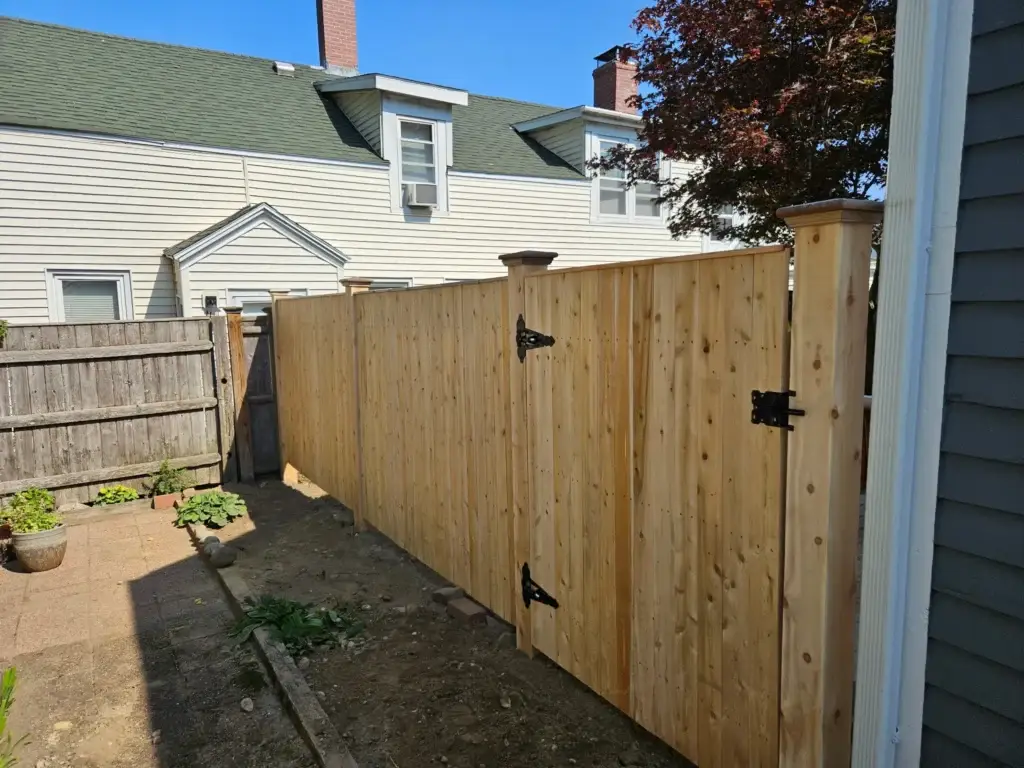
Wood and cedar fencing tend to deliver the strongest returns. Cedar holds up well in Massachusetts weather, ages with character, and appeals to buyers who want a natural look. A six-foot privacy fence in cedar is one of the most common residential fence projects in the state, and for good reason. It gives the homeowner immediate use and holds its value at resale.
**Vinyl fencing** performs well in the ROI conversation because of its low maintenance profile. There is no staining, no painting, and no annual sealing. For buyers comparing two similar homes, a vinyl fence that looks as good in year ten as it did on day one can tip the scale. The upfront cost is higher than wood, but the lifetime maintenance savings close that gap over time.
**Ornamental aluminum and steel fencing** scores highest on curb appeal per dollar. These fences photograph well in listings, last decades with minimal upkeep, and give the front of a property a polished, defined look. The trade-off is that they do not provide privacy, so they work best as a front yard boundary or accent rather than a full-yard enclosure.
Chain link fencing adds the least resale value because of its limited visual appeal. That said, it serves a real purpose for pet containment, property boundaries, and security. In some neighborhoods, a well-maintained chain link fence is exactly what the market expects.
The general rule: match the fence to the neighborhood. Installing high-end wrought iron in a neighborhood where every other home has a basic wood fence may not return the extra cost. And a lot with no fence at all in a neighborhood where every comparable property has one is what appraisers call “under-improved.” In that case, adding a fence brings you up to baseline rather than above it.
Why Does a Fenced Yard Matter So Much to Buyers Right Now?
Two trends are driving fenced-yard demand in the current housing market.
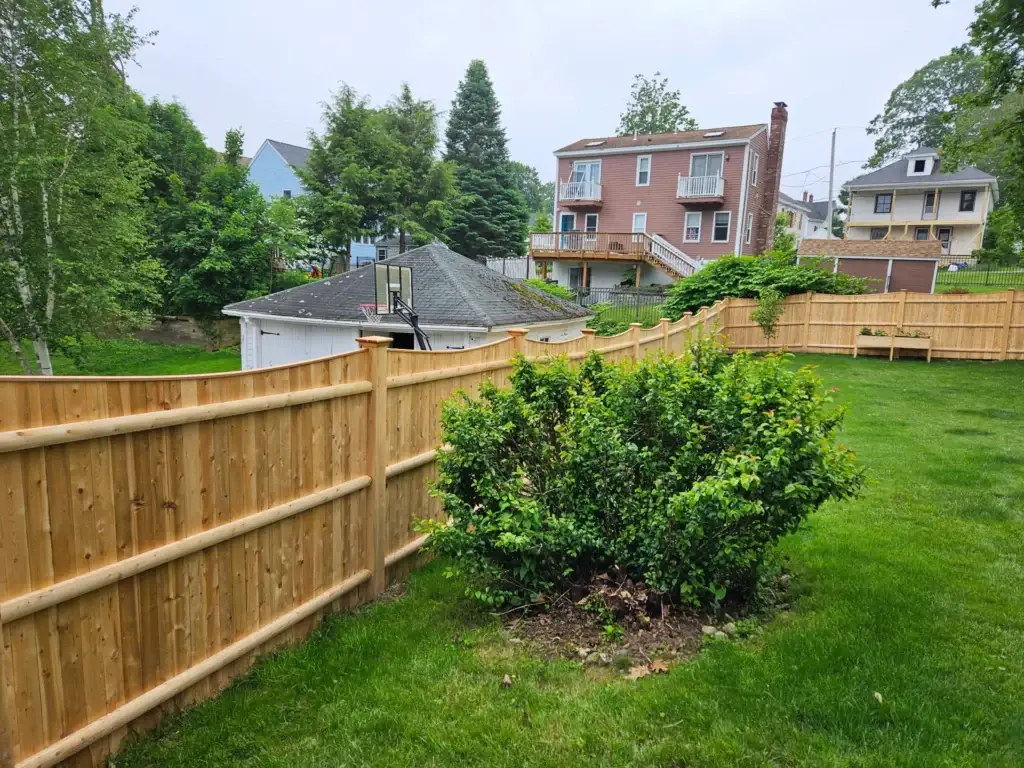
The first is pet ownership. According to the American Pet Products Association, 71% of American households now own a pet, up from 56% in 1988. The National Association of Realtors has noted that pet needs increasingly influence homebuying decisions, with a fenced yard ranking as the most desired pet-friendly feature among buyers. Buyers with dogs view a fenced yard as move-in ready. Without one, they are factoring in the cost and hassle of adding a fence after closing.
The second is outdoor living. Since 2020, the way people use their yards has shifted. A private, usable outdoor space has gone from a nice-to-have to a functional part of the home for many buyers. A fence defines that space and makes it feel intentional rather than open and exposed.
On the North Shore specifically, lot sizes vary widely from town to town. In denser neighborhoods like parts of Newburyport, where homes sit closer together, a privacy fence can transform a small backyard from a fishbowl into a genuine retreat. That perceived expansion of usable space has a real effect on how buyers value the property.
Does a Fence Help a Home Sell Faster?
The data says yes. Zillow has reported that homes with fenced yards tend to sell faster than comparable homes without them. In a market where homes in Essex County already move in roughly three weeks on average, anything that removes a buyer objection speeds up the timeline.
A fence also helps listings photograph better. Real estate photography is the first impression for most buyers, and a defined outdoor space reads as maintained, intentional, and move-in ready. An open yard with no boundary can look unfinished in listing photos, even if the home itself is in great shape.
This matters more in competitive price bands. In Essex County, where the median home value has risen roughly 34% since 2014 and the median sale price sits in the mid-$600,000 range according to recent data, buyers are comparing every detail between similarly priced homes. A quality fence can be the thing that makes your listing feel complete while the one down the street feels like it still needs work.
How Does Location on the North Shore Affect Fence ROI?
Real estate is local, and that applies to fence value just as much as it applies to home prices.
In towns like Newburyport, where median home values have climbed roughly 45% over the past decade according to Impact Essex County data, buyers expect a certain level of finish. A cedar or vinyl privacy fence in the backyard is not an upgrade in these neighborhoods. It is table stakes. Not having one puts your listing at a disadvantage.
In more rural towns like West Newbury, where properties tend to have larger lots, the equation shifts slightly. A full-perimeter fence may not be necessary or expected. But a fenced section around the pool, a defined yard area for dogs, or an ornamental fence along the front property line still adds measurable value.
Historic districts add another layer. In areas with architectural review requirements, the style and material of your fence need to fit the character of the neighborhood. A fence that looks right in context adds value. One that clashes with the surrounding architecture can actually work against you at resale.
The takeaway: talk to a local contractor who knows what buyers in your specific town expect. The right fence for a Newburyport colonial is different from the right fence for a West Newbury farmhouse, and both are different from what works on a commercial property in Haverhill.
What About Pool Fencing and Property Value?
Pool fencing is a special case because it is required by Massachusetts building code. Any pool, spa, or structure holding 24 inches or more of water must be enclosed by a fence that meets state safety standards.
Because pool fencing is mandatory, its value shows up differently in the appraisal. A pool without compliant fencing is a liability, not an asset. It can create inspection issues, insurance complications, and legal exposure. A properly fenced pool, on the other hand, adds the full recreational value of the pool to the property without the risk factors.
For homeowners who already have a pool, making sure the fence meets current code is one of the highest-ROI moves available. It protects the value of the pool itself, which is often one of the most expensive features on the property.
Does a Poorly Maintained Fence Hurt Property Value?
Yes, and this point does not get enough attention. A fence that is leaning, rotting, rusting, or missing sections can actually subtract value from your home. Buyers see a neglected fence and assume the rest of the property has been maintained the same way.
The KW Appraisal Group has noted that a dilapidated fence over 20 years old could detract from a home’s value rather than add to it. The condition of the fence matters as much as the fact that it exists.
This is one area where material choice and build quality pay off over time. A fence built with quality materials by a contractor who does the job right will hold its appearance and structural integrity for years. A cheap fence thrown up fast may look fine on day one but create a liability in five years.
At Olympic Fence, every fence we install comes with a lifetime workmanship warranty. That warranty protects the homeowner’s investment long after installation day, because a fence that stays straight, solid, and good-looking is the one that actually returns value at resale.
What Should You Consider Before Installing a Fence for Resale Value?
If resale value is part of your decision, keep these factors in mind:
Match the neighborhood. Look at what comparable homes in your area have. If most properties in your price range have six-foot privacy fences, yours should too. If front-yard ornamental fencing is the standard, follow that pattern. Standing out in the wrong direction costs you.
Choose materials that last. Cedar, vinyl, and ornamental aluminum all hold up well over time with minimal maintenance. A fence that looks good in year eight is the one that adds value when you list the home.
Hire a professional installer. Crooked posts, uneven spacing, and poor gate alignment are visible from the street. Buyers notice. A professionally installed fence reads as quality. A DIY fence that is slightly off reads as a problem the buyer will need to fix.
Check local regulations first. A fence that violates local zoning or HOA rules can create permit issues at closing. Make sure your fence is compliant before it goes in the ground. We covered the full permit process in our guide to Massachusetts fence permit requirements.
Think about the full picture. A fence is part of your outdoor space, not an isolated project. Pair it with a clean landscape, a functional gate, and good lighting, and the whole package adds more value than any one element on its own.
Thinking about adding a fence to your property? Olympic Fence Co. has been building fences across the North Shore since 1985. We can help you pick the right material, style, and layout for your property and your goals. Contact our team for a free estimate.
Disclaimer: ROI and property value estimates cited in this article are drawn from national industry sources including the Remodeling 2024 Cost vs. Value Report, Angi, HomeAdvisor, and the KW Appraisal Group. Actual returns vary based on location, property type, fence condition, material, and local market conditions. This content is for informational purposes only and does not constitute financial, legal, or real estate advice. Essex County and North Shore home value figures are drawn from publicly available data sources including Zillow, Rocket Homes, and Impact Essex County and may not reflect current conditions at time of reading. For a project estimate specific to your property, contact Olympic Fence Co. at (978) 997-2302.