
Massachusetts Fence Permit Requirements: A Homeowner’s Guide
Most homeowners on the North Shore start their fence project thinking about materials and styles. The permit question usually comes later, sometimes after they have already bought materials or scheduled a crew. That timing can cost you money, delay your project, or force you to tear out work that does not meet local code.
Here is what Massachusetts law actually requires, how North Shore towns handle permits differently, and the steps to take before your fence goes in the ground.
How Massachusetts Fence Regulations Work
Massachusetts runs fence rules on two levels. The state sets a baseline through Massachusetts General Laws Chapter 49, and then each of the state’s 351 cities and towns adds its own zoning bylaws on top.
At the state level, MGL Chapter 49 Section 2 defines a “legal and sufficient” fence as one that stands at least four feet tall, is in good repair, and is built from durable materials like timber, boards, iron, or stone. The state building code (780 CMR) does not generally require a building permit for a standard residential fence. But that state-level rule is just the starting point.
Your town’s zoning bylaws are where the real requirements live. And they vary more than most people expect.
Do You Need a Permit for a Fence Under 6 Feet?
In most Massachusetts towns, a standard backyard fence that stands six feet or shorter does not require a building permit. That covers the majority of residential projects, including a typical six-foot privacy fence or a four-foot chain link property boundary.
That said, “no building permit” does not mean “no rules.” Your fence still needs to comply with local setback requirements, height restrictions by yard location, and any neighborhood-specific design standards. Some towns also require you to file a plot plan or notify the building department even when a formal permit is not needed.
The bottom line: call your town’s building department before you order materials. A five-minute phone call can save you weeks of delays.
What About Fences Over 6 Feet Tall?
Fences that exceed six feet almost always require a building permit in Massachusetts. Several towns require additional review, including approval from the zoning board of appeals, which can add 8 to 12 weeks to your project timeline.
Massachusetts also has a specific “spite fence” law under MGL Chapter 49, Section 21. Any fence that unnecessarily exceeds six feet and was erected to annoy a neighbor can be declared a private nuisance by a court. The affected neighbor has the legal right to seek removal or reduction of the fence.
For most residential projects, six feet provides enough height for privacy and security. If your situation calls for something taller, talk to your building department early so you know what the approval process looks like.
What Are the Height Limits for Front Yard vs. Backyard Fences?
This is where the rules catch people off guard. Massachusetts towns almost always set different height limits depending on where on your property the fence sits.
Front yard fences are typically limited to three and a half to four feet. The goal is to keep sight lines clear for drivers and maintain the open look of the streetscape. A decorative ornamental aluminum or steel fence is a common choice here because it provides a defined boundary without blocking the view.
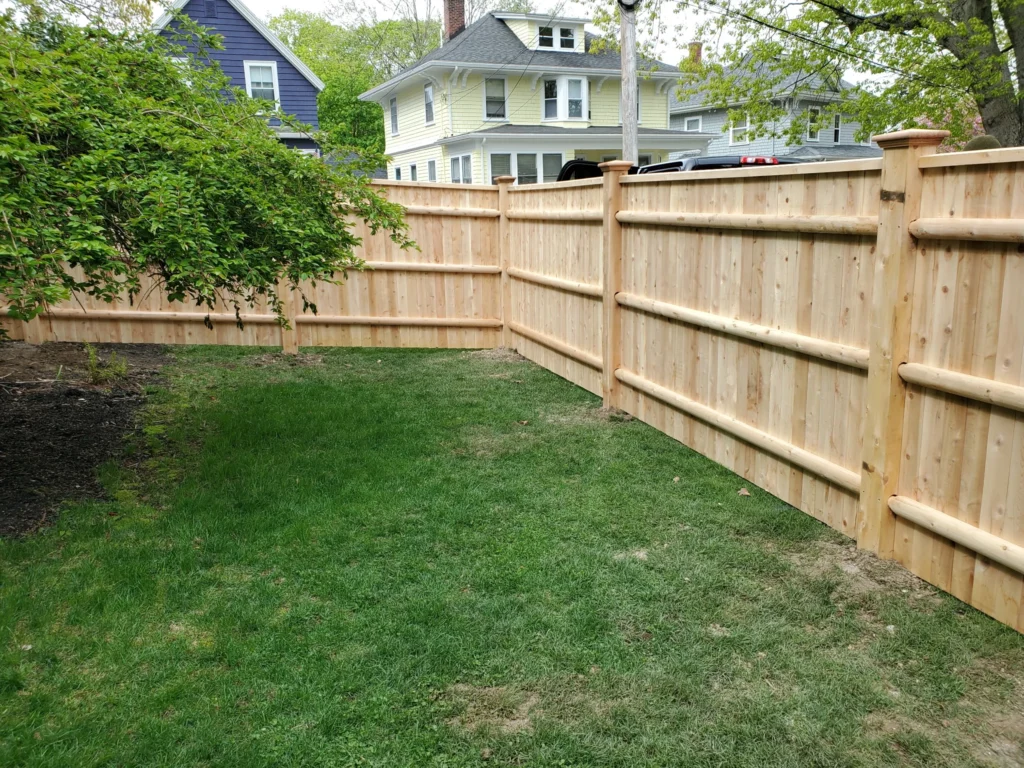
Side and rear yard fences generally allow up to six feet. This is where most homeowners install privacy fencing, whether that is cedar, vinyl, or a board-on-board design.
One thing to watch: some towns measure fence height from the ground on the higher side of a slope. If your yard has grade changes, the effective height of your fence could exceed the limit even though the panels themselves are standard size. Your fence contractor should check grade before installation begins.
Does Pool Fencing Have Different Permit Requirements?
Yes, and these rules are stricter than standard residential fencing. If you are building a fence around a swimming pool, spa, or any structure that holds 24 inches or more of water, your project falls under Massachusetts state building code Appendix M (780 CMR).
Pool fencing must meet specific requirements that go beyond standard fence rules. The minimum height is typically 48 inches (four feet). Gates must be self-closing and self-latching. The latch needs to be positioned where small children cannot reach it. And the fence design itself cannot have footholds or openings large enough for a child to climb through.
Your town’s building inspector must approve pool fence plans. This is one area where skipping the permit process is not just a code violation – it is a serious safety and liability issue.
What Do You Need to Know About Property Lines Before Installing a Fence?
Property line rules are one of the most common sources of fence disputes in Massachusetts. Here is what to keep in mind.
Under MGL Chapter 49, a fence built directly on the property line between two lots is considered a “partition fence.” Both property owners share responsibility for maintaining it, and the cost of building and upkeep is generally split.
Most towns require that fences be installed up to but not on the property line. The Town of Newbury, for example, specifies in its zoning bylaw that fences may be installed up to the property line but not on it, and the finished or “good” side must face the neighboring property.
If there is any question about where your property line falls, get a survey done before the fence goes up. Relocating a finished fence is expensive and frustrating for everyone involved.
Are There Material Restrictions for Fences in Massachusetts?
State law is fairly flexible on materials. MGL Chapter 49 Section 2 lists rails, timber, boards, iron, and stone as acceptable options. In practice, the most common residential fence materials – cedar, vinyl, chain link, and ornamental aluminum – are all permitted in standard residential zones across the North Shore.
What is restricted in residential areas:
Barbed wire and razor wire are prohibited in residential zones in nearly every Massachusetts municipality
Concertina wire falls under the same restrictions
Broken glass embedded on top of fences is not allowed
Electric fencing is generally limited to agricultural zones, with strict marking requirements where permitted
Barbed wire and razor wire are prohibited in residential zones in nearly every Massachusetts municipality
Concertina wire falls under the same restrictions
Broken glass embedded on top of fences is not allowed
Electric fencing is generally limited to agricultural zones, with strict marking requirements where permitted
Commercial fencing projects for industrial or municipal properties may have different material allowances. Security-grade materials that are off-limits for residential lots are sometimes permitted for commercial sites, depending on the local zoning district.
How Do Historic District Rules Affect Fence Permits on the North Shore?
If your property sits within a local historic district, you may need an additional layer of approval before installing a fence. Towns like Newburyport have historic preservation requirements that go beyond standard zoning.
In these districts, fences visible from the street typically require review by the local historic commission or an architectural review board. The commission looks at whether the fence design fits the architectural character of the neighborhood. Material choice, height, color, and style all come into play.
This does not mean you cannot install a fence. It means you need to plan for the review process in your timeline. Submitting your design early, with material samples and a site plan, helps move the approval along.
What Steps Should You Take Before Starting a Fence Project?
Here is a practical checklist that covers the basics for any residential fence installation in Massachusetts:
Call your town’s building department. Ask whether your project requires a permit, a plot plan, or any notification. Mention the fence height, material, and which part of your property it will go on.
Check your property survey. If you do not have one, consider getting an updated survey before the fence goes in. This prevents boundary disputes after the fact.
Look into HOA or neighborhood restrictions. If your property is in a planned development or has a homeowners’ association, those bylaws may impose additional rules on fence height, style, or materials.
Ask about historic district requirements. If your home is in a designated historic district, confirm whether the local historic commission needs to review your plans.
Confirm pool fence requirements separately. Pool fencing has its own approval process under the state building code. Your building inspector will need to sign off on the design before construction.
Talk to your fence contractor. A contractor who works regularly in your area will already know the local permit requirements and can help you file the right paperwork. This is one of the advantages of hiring a local company over a national chain or big-box installer.
Call your town’s building department. Ask whether your project requires a permit, a plot plan, or any notification. Mention the fence height, material, and which part of your property it will go on.
Check your property survey. If you do not have one, consider getting an updated survey before the fence goes in. This prevents boundary disputes after the fact.
Look into HOA or neighborhood restrictions. If your property is in a planned development or has a homeowners’ association, those bylaws may impose additional rules on fence height, style, or materials.
Ask about historic district requirements. If your home is in a designated historic district, confirm whether the local historic commission needs to review your plans.
Confirm pool fence requirements separately. Pool fencing has its own approval process under the state building code. Your building inspector will need to sign off on the design before construction.
Talk to your fence contractor. A contractor who works regularly in your area will already know the local permit requirements and can help you file the right paperwork. This is one of the advantages of hiring a local company over a national chain or big-box installer.
How Long Does the Fence Permit Process Take in Massachusetts?
For standard residential fences that fall within local height limits, many towns do not require a formal permit at all. Where a permit is needed, most building departments process fence permits within one to three weeks.
Projects that require a variance – typically because the fence exceeds the maximum height for the zone – can take significantly longer. Zoning board hearings run on set schedules, and the full process from application to decision can take 8 to 12 weeks in some municipalities.
Pool fence permits generally fall somewhere in between. The building inspector needs to review and approve the plans, but it does not usually require a public hearing unless the fence involves a variance.
Planning your timeline around the permit process, rather than the other way around, saves a lot of headaches. A good fence contractor will build the permit timeline into your project schedule from the start.
Ready to start your fence project? Olympic Fence Co. has been installing fences across the North Shore since 1985, and we know the local permit requirements in the towns we serve. If you have questions about what your town requires, reach out to our team and we will walk you through it.
Disclaimer: This article provides general guidance based on Massachusetts General Laws and publicly available municipal zoning bylaws. Fence permit requirements, height limits, and review processes vary by town and are subject to change. This content is for informational purposes only and does not constitute legal advice. Always confirm current requirements with your local building department before beginning any fence project. Any cost or pricing figures referenced are general ranges and may not reflect your specific project. Contact Olympic Fence Co. at (978) 997-2302 for a free estimate tailored to your property.