Most commercial fence problems start before anyone digs. The spec is vague, three contractors price three different fences, and nobody can compare the bids. This guide walks property managers, facility managers and town staff through the decisions that shape a commercial or municipal fence in Massachusetts, in the order they come up.
If you already have a plan and want a price, our commercial fencing page covers what Olympic Fence Co installs for businesses and towns across a 70-mile radius of West Newbury.
What should you decide before asking for bids?
You need to settle four things: the job the fence has to do, the exact fence line, how people and vehicles get through it, and who has to approve it. A contractor can help with every one of these, but settling them first is what makes the bids comparable.
| Decision | What to settle | Why it matters for the bid |
|---|---|---|
| Purpose | Keep people out, keep children or players in, screen equipment, or mark a boundary. | Purpose sets the height, the material and whether climb resistance matters at all. |
| Fence line | A site plan or survey with total linear footage, corners, grade changes, paving and anything buried along the line. | Footage drives most of the cost, and corners and slopes add posts and labor. |
| Access | How many gates, which are for people and which are for vehicles, swing or slide, and how each one locks. | Gates and hardware are often the largest single line in a commercial quote. |
| Approvals | Property owner or landlord, town building department, conservation commission, school committee or board. | Each sign-off adds time, so it belongs in the schedule from the start. |
Which fence type fits which commercial use?
Chain link covers most commercial perimeters because it is strong, open to view and the least expensive per foot. Other materials earn their place where appearance or screening matters more than cost.
| Use | Common choice | What to specify |
|---|---|---|
| Warehouse, yard or lot perimeter | Galvanized or vinyl-coated chain link | Height, fabric gauge, top rail or tension wire, and whether you want barbed wire or slats. |
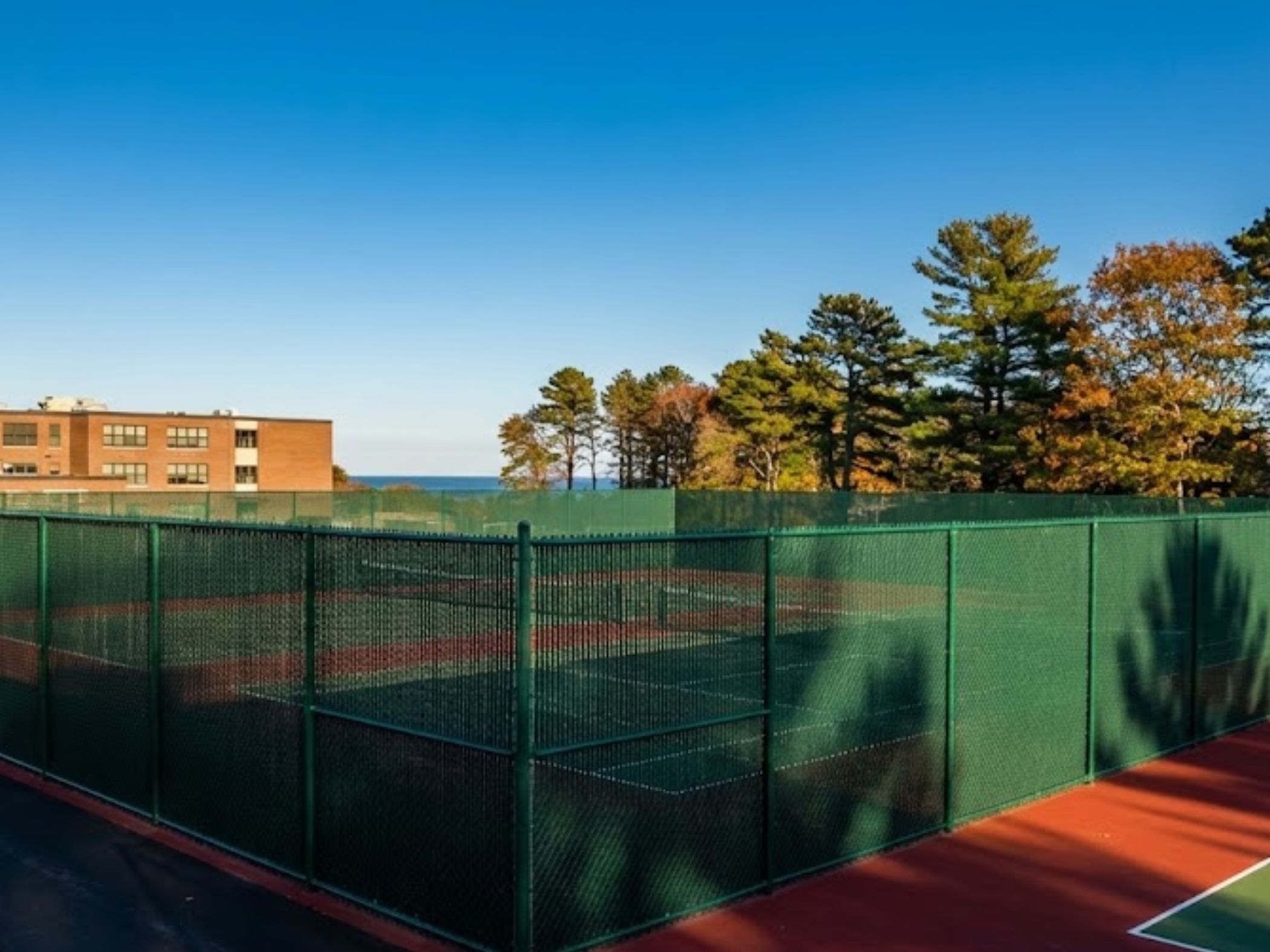
| Ball fields and tennis courts | Vinyl-coated chain link, usually taller than a perimeter fence | Backstop height, windscreen, and gates wide enough for maintenance equipment. |
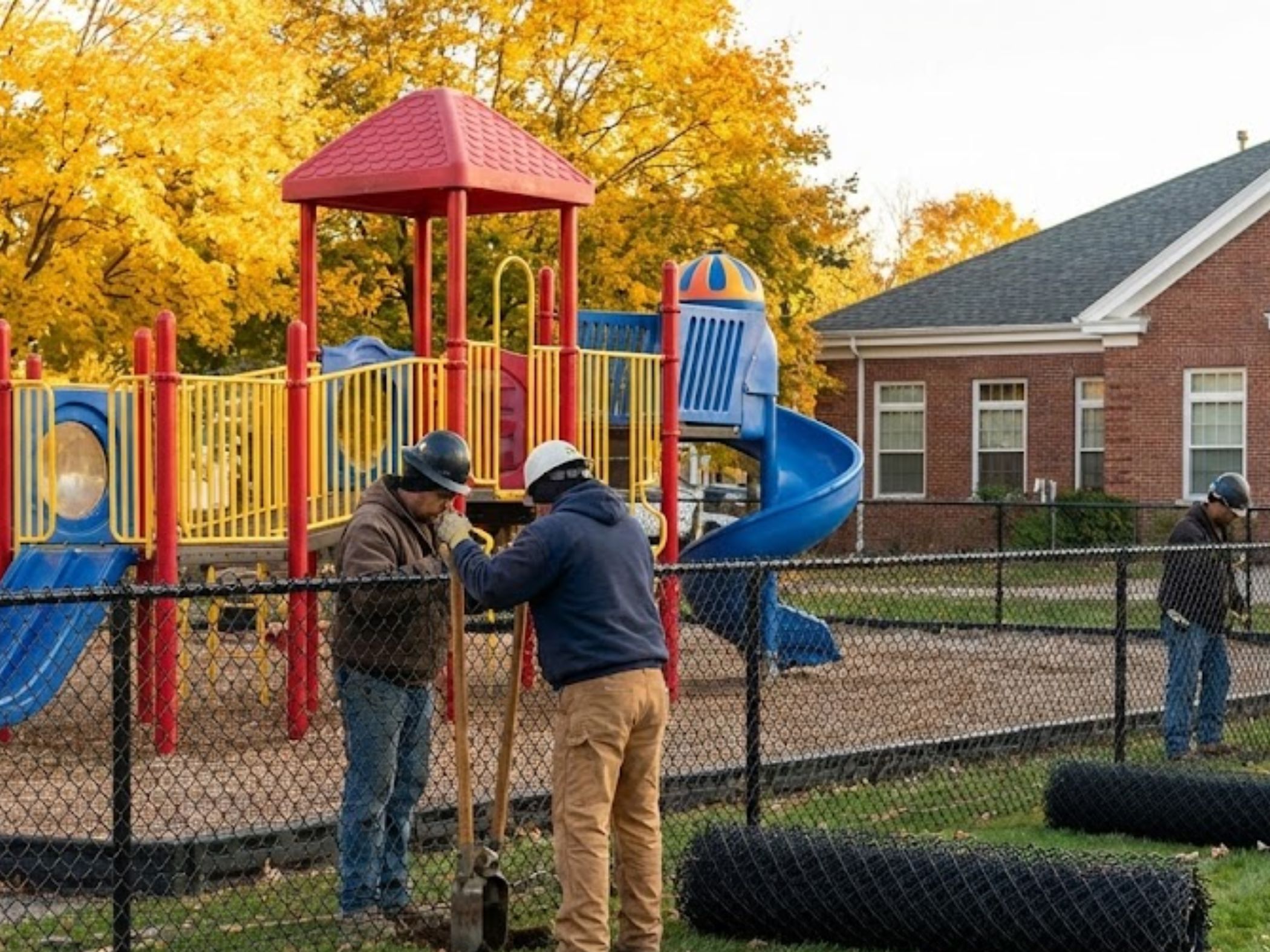
| Playgrounds and child care centers | Chain link or ornamental metal | Gate latches that close reliably and sit out of a child’s reach, plus a clear line of sight for staff. |
| Storefronts, offices and entrances | Ornamental aluminum or steel | Picket style, powder-coat color and how the fence meets the building and walkways. |
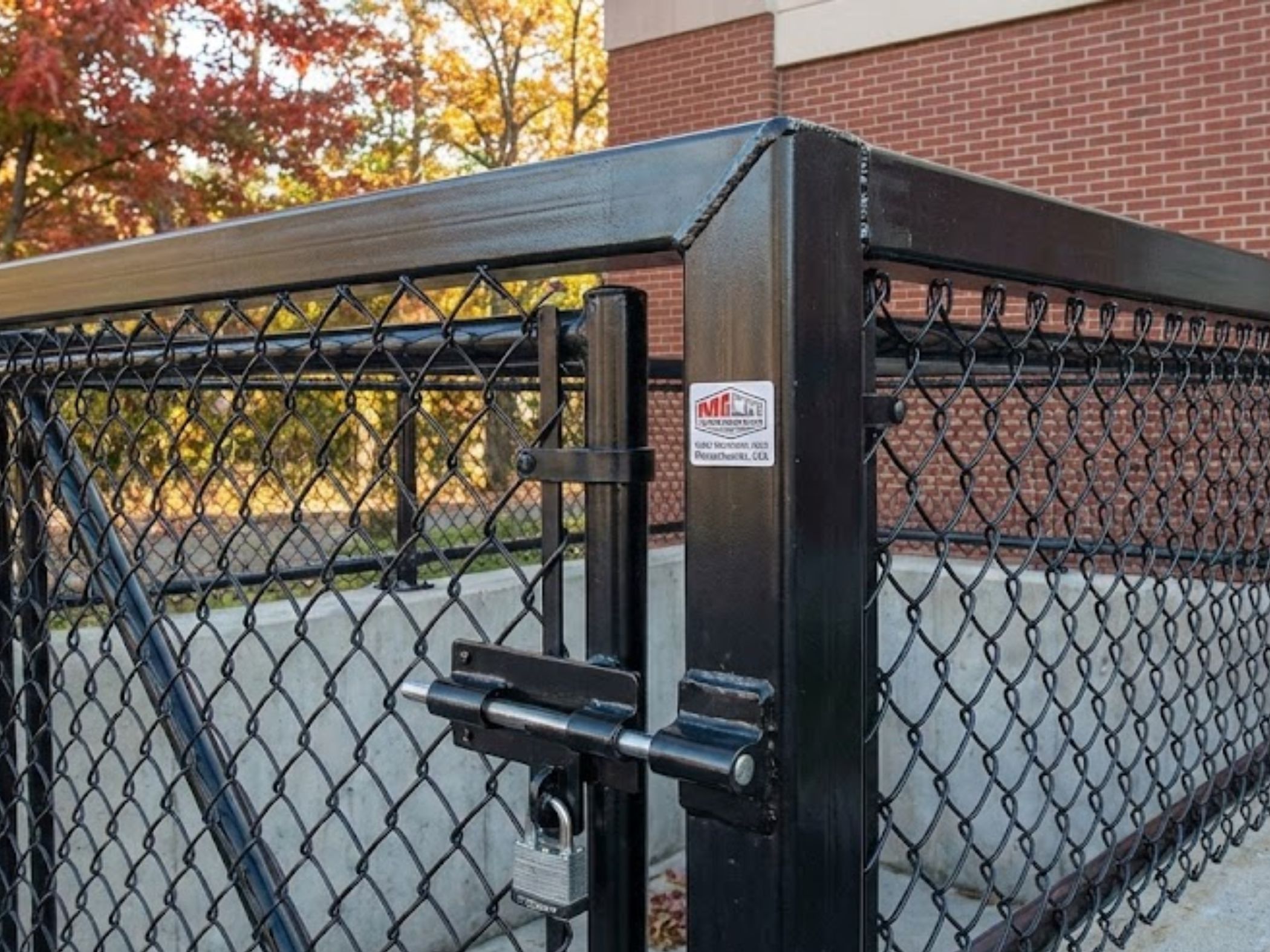
| Dumpster and utility enclosures | Chain link with privacy slats, or solid vinyl panels | Lockable gates, drop rods to hold them open, and bollards or curbing where trucks back in. |
| Screening from neighbors | Vinyl privacy fencing | Height allowed by the town and how the panels handle grade changes. |
For more on each material, see our pages on chain link fencing, ornamental aluminum and steel fencing and vinyl fencing.
Which specs change the price and the life of a chain link fence?
Five specs do most of the work: the fabric, the coating, the posts and footings, the framework, and the gates. Two fences that look alike from the road can differ on every one of them, which is why two bids for “a six-foot chain link fence” can be far apart.
- Fabric gauge and mesh. A lower gauge number means thicker wire, so 9 gauge is heavier than 11 gauge. Standard mesh is 2 inches; a smaller mesh is harder to climb and costs more.
- Coating. Galvanized fabric is the baseline. Vinyl-coated fabric in black or green adds a second layer of protection and looks finished next to a building or field.
- Posts and footings. Terminal posts at ends, corners and gates carry the tension and should be a heavier pipe than line posts. Footings set in concrete below the frost line keep New England frost from heaving posts out of the ground.
- Framework. A top rail stiffens the fence and resists climbing and leaning. A bottom tension wire keeps the fabric tight at the ground so it cannot be pushed under.
- Gates. A cantilever slide gate suits a wide vehicle opening where there is no room for a swing. Heavier gates need hinges and posts sized for their weight, or they sag within a few seasons.
Most commercial specifications reference ASTM standards: F1083 for galvanized pipe framework, F392 for galvanized fabric, F668 for vinyl-coated fabric and F567 for installation practice. Naming them in a request for bids is the simplest way to make every contractor price the same fence.
Do you need a permit for a commercial fence in Massachusetts?
Many do, and each town makes that call. There is no single statewide answer: each town’s zoning bylaw sets height limits and setbacks, and its building department decides when a fence needs a permit. The rules can change at the town line, so a spec that passed in one community may need changes in the next.
Other reviews come up on commercial sites. A fence within the 100-foot buffer zone of a wetland falls under the local conservation commission. Historic districts, corner lots and driveways where a fence could block sight lines can add their own requirements.
Every fence also involves digging, and Massachusetts law requires a call to Dig Safe at least 72 business hours before excavating, not counting weekends or holidays. When a contractor does the work, holding a valid Dig Safe ticket is the contractor’s responsibility. On our projects, we take care of the permit paperwork with the town as part of the job.
How does bidding work for town and school fence projects?
Public fence work is bid under Massachusetts public bidding law, and the town or district’s procurement office runs the process. That office publishes the bid documents, sets the deadlines and decides how questions are handled, so the buyer sets the schedule.
- Written specs and drawings. Public bids are compared line by line, so the materials, heights, gate details and standards above need to be in the documents.
- Prevailing wage. Fence installation on public works projects in Massachusetts generally pays prevailing wage, which shows up in public bid prices.
- Site walks and written questions. Many bids include a site visit and a cutoff date for questions, with answers issued to every bidder.
- Calendar. Schools and parks usually schedule fence work around the academic year, sports seasons and public events.
Private commercial projects are simpler, but the same idea applies. Each bidder should price the same fence line, height, material, gate count and hardware, and each written quote should say what happens to the old fence and who handles cleanup.
What drives the cost of a commercial fence?
Olympic Fence Co does not publish a commercial price, because a number without your fence line attached to it would mislead you. Four things move the quote.
- Footage and height. More fence and taller fence mean more fabric, more posts and more labor.
- Material and coating. Vinyl-coated chain link, ornamental metal and vinyl privacy panels each cost more per foot than galvanized chain link.
- Gates and hardware. Vehicle gates, slide gates and locking hardware can rival the cost of a long run of fence.
- Site conditions. Ledge, slopes, setting posts through pavement, and removing an old fence all add time.
What should a commercial fence warranty cover?
A commercial fence carries two separate warranties, and a bid should be clear about both. The installer covers the installation. The manufacturer covers the materials, and those terms vary by product.
Our installation is backed by a lifetime workmanship warranty. If something on your fence fails because of how we installed it, such as a post set wrong or a gate hung out of true, we come back and fix it. The warranty stays with the original customer and does not transfer if the property is sold. It covers our installation, not vehicle strikes, plow damage or storm damage. For materials, we hand over the manufacturer’s paperwork at completion where it is available, and you can call us first if a problem comes up.
How do you keep a commercial fence in service?
A commercial fence stays in service when someone inspects it on a schedule and fixes the gates first, because gates take the most wear and cause the most security gaps. A walk of the fence line each spring and fall catches most problems while they are still small.
- Gates. Look for sagging, latches that no longer catch, and drop rods or hinges that have worked loose.
- Posts. Check for posts that leaned or lifted over the winter, especially at corners and gates.
- Fabric. Look for loose ties, slack fabric and gaps at the bottom where the tension wire has failed.
- Impact damage. Snow plows, delivery trucks and landscaping equipment bend rails and posts, often without anyone reporting it.
When a post has failed, a gate needs a rebuild or a section has been hit, our fence repair service handles structural repairs on commercial fences in our service area.
What do commercial customers say about Olympic Fence Co?
Highly recommend Olympic Fence Co!! Had a chain link fence installed at my child care center and I couldn’t be happier. From start to finish I was pleased with everything.
Colleen M.
From the beginning, James was professional, responsive, and very easy to communicate with. He kept us informed throughout the process and made everything simple and straightforward.
Ibrahim T., dumpster gate repair at Lakeside Inn
Have a fence line and a rough spec? We price commercial and municipal projects within 70 miles of West Newbury and can walk the site with you.