Wood vs. Vinyl Fence Costs in Massachusetts — Which Is the Better Fit for Your Home?
Choosing between wood and vinyl fences in Massachusetts involves initial cost, long-term expenses, and durability against New England weather. This guide compares cost per linear foot, lifetime expenses, maintenance needs, and permit considerations for cedar, pressure-treated wood, and vinyl. Read on for cost tables and local guidance to help you choose.
Wood Fence Costs in Massachusetts
Wood fence installation in Massachusetts involves materials, labor, and permits. Initial costs can be lower than vinyl, but ongoing maintenance like staining adds to lifetime expenses. Cedar privacy fences typically cost $25–$45 per linear foot. Periodic staining or sealing is essential for New England weather. Key cost drivers include wood species, height, and site complexity. See the table below for common wood fence types.
| Wood Fence Type | Cost per linear foot (MA) | Typical height & labor notes |
|---|---|---|
| Cedar privacy fence (vertical boards) | $25–$45 / linear foot | Common 6′ height; moderate labor for pickets and fastening; coastal‑grade cedar resists salt air better |
| Pressure-treated wood picket/privacy | $18–$35 / linear foot | Typical 4’–6′ heights; lower material cost but higher long‑term maintenance due to treatment needs |
| Wood-on-steel post system (wood slats on steel posts) | $30–$55 / linear foot | Steel posts cut rot risk; installation requires extra labor for anchoring and specialized hardware |
Pros and Cons of Wood Fences
Wood offers design flexibility, a natural look, and often lower initial material costs. However, it requires regular maintenance (2-4 year staining/sealing), carries rot risk, and is susceptible to insect damage, especially with coastal salt and freeze-thaw cycles. Choose wood for style and customization, accepting periodic upkeep.
Vinyl Fence Costs in North Shore Massachusetts
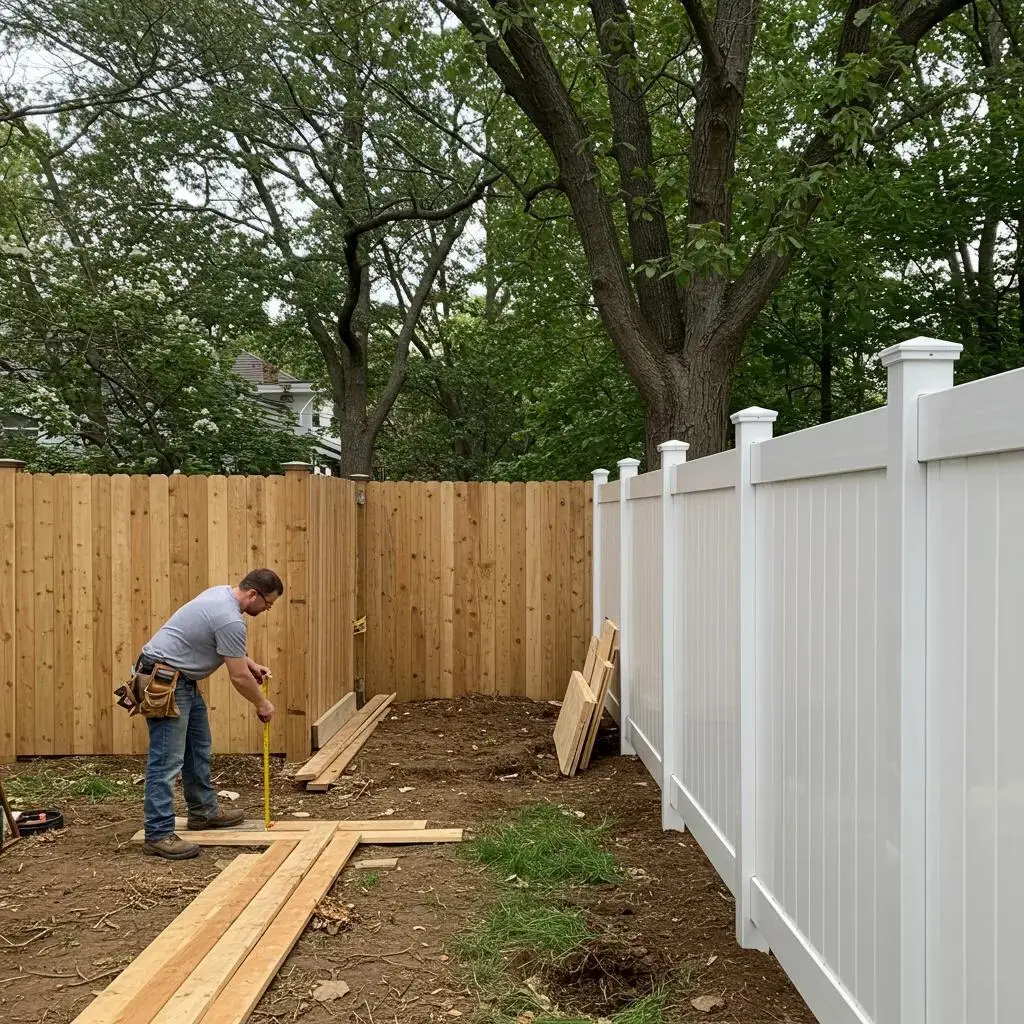
Vinyl fences have higher upfront costs than wood but offer significantly lower maintenance, saving money over 10–20 years. Pricing ranges from economy picket ($30/LF) to premium reinforced privacy systems ($80+/LF), depending on spacing, gates, and terrain. Vinyl excels in low care, color retention, and resistance to rot/insects. Potential drawbacks include cold-weather brittleness and thermal expansion if not specified for New England. For accurate costs, please inquire.
| Vinyl Fence Type | Price range per linear foot (MA) | Warranty & maintenance notes |
|---|---|---|
| Economy vinyl picket | $30–$45 / linear foot | Shorter factory warranty; low maintenance but thinner profiles are less impact‑resistant |
| Mid-range privacy vinyl | $40–$60 / linear foot | Balanced durability and color options; often backed by multi‑year manufacturer warranties |
| Premium reinforced vinyl | $55–$80+ / linear foot | Heavier rails and thicker posts; extended warranty and better performance in harsh weather |
Pros and Cons of Vinyl Fences
Vinyl offers low maintenance, consistent aesthetics, and resistance to rot/insects. Advantages include no staining, easy cleaning, and predictable maintenance. Disadvantages are limited color/finish choices, potential cold-weather cracking, and complex panel repairs. Pick vinyl when low upkeep and warranty‑backed durability matter more than custom wood aesthetics.
Wood vs. Vinyl: Cost, Durability, and Maintenance
Wood is often cheaper initially but requires regular care; vinyl costs more upfront but has fewer ongoing expenses. Evaluate initial cost, 10-year maintenance, New England lifespans, and warranties for total cost of ownership. New England’s weather impacts both: wood is susceptible to rot and movement; vinyl can expand, contract, or become brittle. Proper installation (elevated rails for wood, reinforced posts for vinyl) mitigates these issues. The table below provides lifecycle estimates for both materials in Massachusetts.
| Material | Initial cost (per LF) | 10-year maintenance cost (estimate) | Typical lifespan | Warranty notes |
|---|---|---|---|---|
| Cedar wood | $25–$45 | $800–$2,000 (staining/sealing, minor repairs) | 10–20 years (with maintenance) | Material warranties vary; workmanship covered separately by contractor warranty |
| Pressure-treated wood | $18–$35 | $900–$2,500 (treatment reapplication, replacements) | 8–15 years | Lower material cost but higher maintenance risk |
| Vinyl (mid-premium) | $40–$70 | $100–$400 (cleaning, occasional repairs) | 20+ years (with proper installation) | Manufacturer material warranties common; workmanship warranty is separate |
Local Permit Requirements & Olympic Fence Co Support
Massachusetts fence projects are subject to municipal rules on height, setbacks, and sight lines. Permits are often required for taller or front-yard fences, with historic/coastal districts adding design restrictions. Permit fees vary by town, and approval timelines typically range from one to six weeks. Olympic Fence simplifies this by preparing and submitting applications, ensuring accurate documentation to reduce approval times. Confirm local height limits, setback rules, and permit requirements. Prepare a property sketch. Rely on experienced contractors for permit filing.
Environmental & Aesthetic Factors: Wood vs. Vinyl
Environmental footprint, finish options, and neighborhood context influence fence choice. Sustainably sourced wood is renewable and biodegradable, though maintenance impacts its footprint. Vinyl manufacturing uses petrochemicals, but its long life and minimal maintenance reduce lifetime environmental impact. Wood offers extensive on-site customization (stain blends, custom trim), while vinyl provides consistent factory styles with fewer customization options. Choose wood for bespoke detailing; vinyl for a uniform look and minimal upkeep.
Fence System Life-Cycle Cost Comparison Study
This report analyzes several fencing options to identify systems that deliver effective service at minimum life‑cycle cost. The study covers initial installation costs, maintenance expenses, and replacement costs over expected service life, and considers durability, environmental conditions, and performance requirements.
Engineering life‑cycle cost comparison study of barrier fencing systems, 1999
Why Choose Olympic Fence Co for Your Fence Installation?
Olympic Fence is a North Shore contractor providing professional installation, repair, and custom design, with local permit handling and New England-tuned methods. Their expertise in wood-on-steel systems and a lifetime workmanship warranty address homeowner concerns about longevity, permits, and timelines. They guarantee build quality, covering anchoring, alignment, and connection issues. Based in West Newbury, MA, they emphasize family values, prompt local service, and clear communication. Request a site visit to align material choices, permit needs, and timelines with your budget and property.
Frequently Asked Questions
What Are the Key Differences in Maintenance Between Wood and Vinyl Fences?
Wood fences require routine staining or sealing every 2–4 years to prevent decay and insect damage. Vinyl fences are lower maintenance, typically needing only occasional washing, but inspect after severe weather for cracks or loose hardware. fence repairs
How Do Weather Conditions in Massachusetts Affect Fence Longevity?
Massachusetts weather (cold winters, humid summers) impacts both materials. Wood can rot or shift with moisture; vinyl may become brittle in extreme cold if underspecified. Proper installation—elevated rails for wood, reinforced posts/correct spacing for vinyl—mitigates issues and extends longevity.
Are There Any Specific Local Regulations for Fence Height in Massachusetts?
Yes, height limits and regulations vary by town. Many municipalities require permits for fences above certain heights or in front yards; historic districts may have stricter rules. Check with your local zoning office before installation to avoid fines or modifications.
Finalizing Your Fencing Investment Decision
Choosing wood or vinyl in Massachusetts depends on priorities: initial cost vs. upkeep, desired aesthetic, and maintenance commitment. Wood offers custom finishes and a natural look; vinyl provides low upkeep and long-lasting performance. Understanding these trade-offs helps you select the best fit. For tailored guidance and professional installation, contact Olympic Fence Co for a site visit and detailed estimate.
Ready to discuss your fencing project? Contact Olympic Fence Co today for a personalized consultation and free estimate.
Disclaimer: All specific job costs mentioned in this article are estimates and subject to a detailed quote based on your unique project requirements and site conditions. For an accurate assessment, please contact Olympic Fence Co for a personalized consultation.